
Workflow
Sentence Mining vs Vocabulary Decks: Which Should You Use?
Compare sentence mining and isolated vocabulary cards across speed, context, ambiguity, audio, review cost, and beginner usefulness.
Sentence mining and vocabulary decks solve different problems. A curated vocabulary deck can build broad foundations quickly. Sentence mining can preserve contextual meaning, grammar, audio, and personal relevance from material you actually consume.
The useful choice is rarely one system forever. It is which format makes this item a fair and economical review.
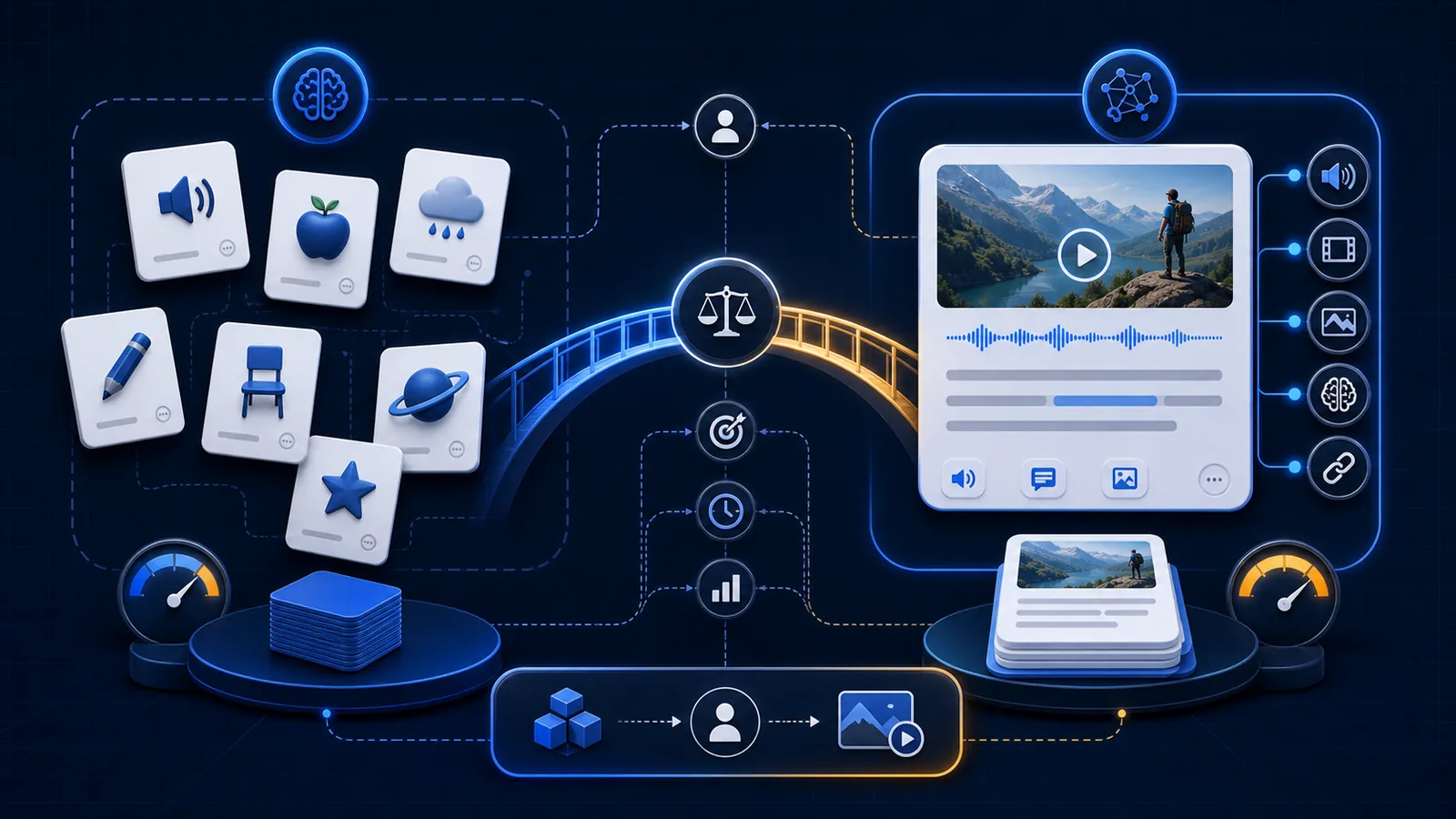
The quick comparison
| Dimension | Curated vocabulary cards | Sentence-mined cards |
|---|---|---|
| Setup | Fast when the deck is ready | Slower because examples are selected and checked |
| Context | Limited by design | Preserves a natural situation |
| Meaning | Efficient for concrete items | Better for polysemy, register, and collocation |
| Audio | Often a clean dictionary recording | Can preserve the original speaker and prosody |
| Coverage | Systematic | Personal and uneven |
| Review cost | Low per simple card | Higher when cards include long sentences or media |
| Motivation | Predictable but generic | Connected to content you chose |
Neither column is inherently better. A concrete beginner noun and a pragmatic response phrase do not need the same card.
When isolated vocabulary cards work
Use an isolated card when:
- the item is concrete and visually identifiable;
- one translation is an adequate starting approximation;
- spelling or a short form is the actual target;
- you need systematic coverage of essential words; or
- sentence context would add reading burden without clarifying the answer.
Examples include numbers, common objects, days of the week, or a writing-system symbol. A picture of one object may be a fairer prompt than an English label.
Curated decks also reduce creation time. For a beginner who cannot yet understand natural sentences, a well-designed foundational deck can make future input more accessible.
The weakness appears when the word changes meaning across contexts. An isolated card for llevar that lists “carry, wear, take, have been doing” asks for a dictionary entry, not one retrievable meaning.
When sentence cards work
Use a sentence when:
- the target's meaning depends on context;
- a preposition, particle, or collocation matters;
- register or speaker relationship matters;
- natural audio is part of the goal;
- the sentence demonstrates grammar you want to recognize; or
- the personal source makes the phrase worth remembering.
A sentence can make an ambiguous word honest:
Llevo dos años estudiando español.
Now the target is the duration pattern, not every possible meaning of llevar.
Sentence cards are not automatically superior. A long sentence can test reading stamina, hide several targets, or consume a disproportionate review time. Use the sentence-selection filter before adding one.
Recognition before production
A complete target-language sentence is naturally suited to recognition. Reversing it from an English translation may permit several correct answers. Add production only through a specific situation or constrained target. The Basic and reversed-card guide shows that distinction.
Build a hybrid system
A practical progression:
- Use a small curated deck for high-frequency foundations.
- Read, listen, and watch at an appropriate level.
- Mine only language that is useful and understandable enough.
- Convert an isolated word into a sentence card when reviews reveal ambiguity.
- Suspend a mined sentence after the target becomes effortless or irrelevant.
You can also keep both formats for one item when they train different things:
- a picture → noun card for rapid production;
- a sentence-recognition card for a less concrete contextual meaning; and
- an audio-first card only when natural speech remains difficult.
Do not create all three automatically. Let a real learning need justify each scheduled card.
Organize by fields, not deck proliferation
Store Sentence, Focus, Meaning, Audio, Image, and Source separately. Use tags for source, topic, or learning stage. One note type can support word and sentence layouts without forcing every note into the same visible fields. The Anki fields guide provides a clean baseline.
If you are new to the workflow, begin with what sentence mining is, then use the complete sentence-mining-with-Anki setup.
Sentence vs vocabulary FAQ
Is sentence mining better than vocabulary flashcards?
It is better for context-sensitive meaning, grammar, collocations, and natural audio. Isolated cards can be more efficient for concrete, unambiguous beginner vocabulary.
Can I use both?
Yes. Use a curated deck for broad foundations and sentence mining for language that matters in material you actually consume.
When should a word card become a sentence card?
Add context when the word has several meanings, an important pattern, register constraints, or source audio worth preserving.
Related guides
What Is Sentence Mining? A Practical Beginner's Guide
Learn what sentence mining is, how one useful moment becomes a focused Anki card, what to save, and how to avoid turning immersion into data entry.
Read article →Sentence Mining With Anki: Examples, Template, and Checklist
Learn how to sentence mine with Anki: choose one-target sentences, see a complete card example, use a practical template, and control review load.
Read article →Anki Card Examples for Language Learning: 6 Better Designs
Compare six weak and improved language-learning Anki cards for sentences, listening, images, Cloze, vocabulary, and production.
Read article →