
Card design
Anki Card Examples for Language Learning: 6 Better Designs
Compare six weak and improved language-learning Anki cards for sentences, listening, images, Cloze, vocabulary, and production.
A useful language-learning Anki card makes one question obvious and gives you enough evidence to judge the answer after you commit to it. It does not need every possible field, a decorative theme, or a reverse card for every note.
The examples below start with cards that look reasonable but create ambiguous, shallow, or overly easy reviews. Each improvement changes the retrieval task rather than merely changing the colors.
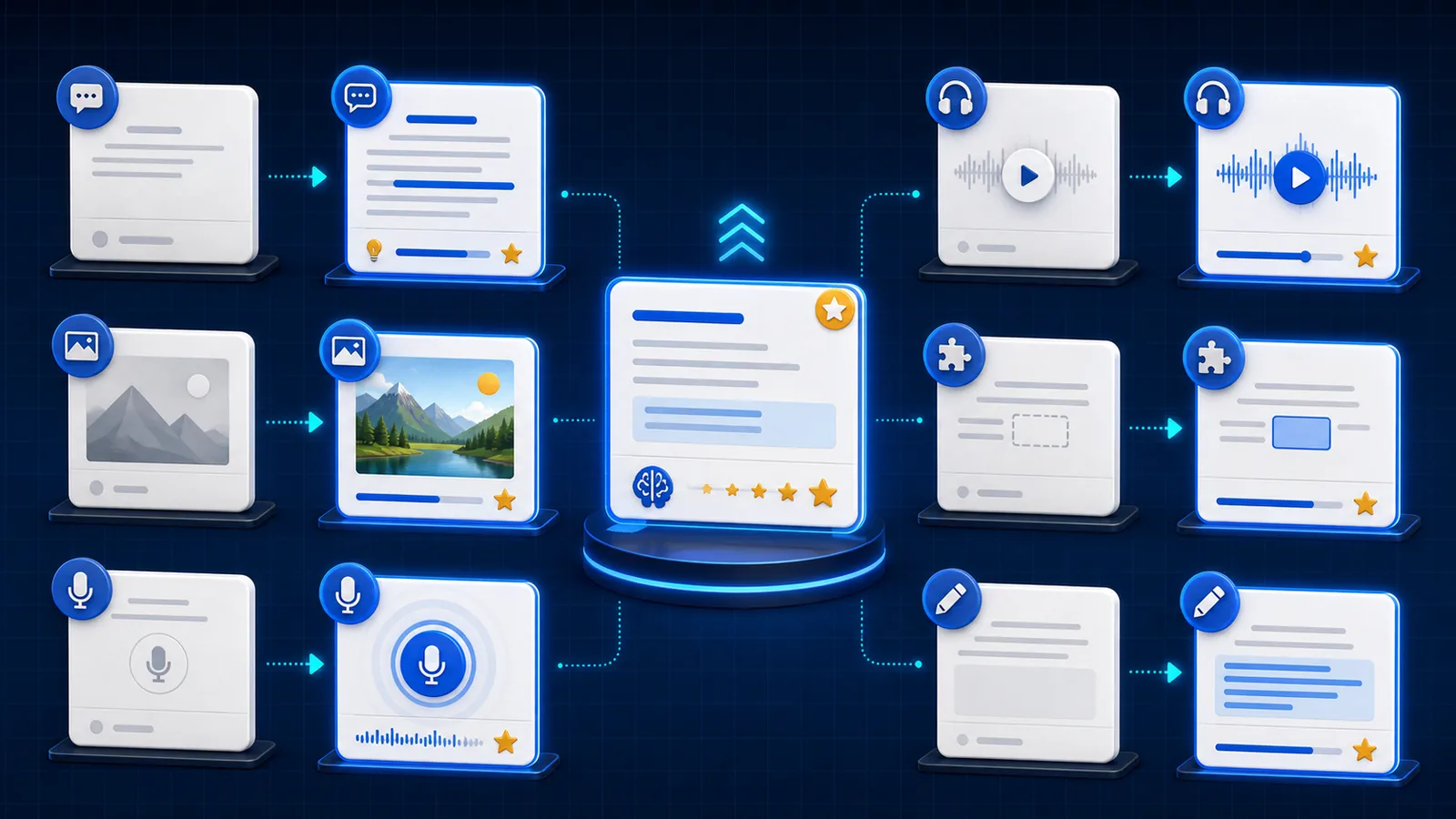
The five-second card check
Before adding a card, answer five questions:
| Check | A useful answer sounds like |
|---|---|
| What am I testing? | “Understand this sentence” or “recognize this audio” |
| Is there one intended target? | One expression, contrast, form, or meaning |
| Does the front leak the answer? | No revealing translation, transcript, or image |
| Can I verify the answer? | The back has meaning, transcript, source, or a short note |
| Is the review worth repeating? | The language is useful enough to see next month |
If the first answer contains “and,” the card may be testing too much. If you cannot explain how you will grade an answer, the prompt is probably too vague.
Six before-and-after examples
1. Isolated polysemous word → one meaning in context
Before
| Front | Back |
|---|---|
llevar | to carry; to wear; to take; to have been doing |
Remembering any translation can feel correct, while failing to list all of them can feel wrong.
After
| Front | Back |
|---|---|
Llevo dos años estudiando español. | I have been studying Spanish for two years.Focus: llevar + time + gerund |
The sentence selects one meaning and one pattern. Keep a single-word card when the item is concrete and unambiguous; add context when its meaning or grammar changes across situations.
2. Overloaded sentence → one useful target
Before: a paragraph with four highlighted unknown words, four definitions, a full translation, grammar notes, and an image.
After: one natural sentence, one focus phrase, one contextual meaning, and the source:
Al final, resultó ser más fácil de lo que pensaba.
Focus: resultar ser
Meaning here: to turn out to be
One review should tell you what failed. If another expression deserves a card, use a different example where it is the clearest target.
3. Text-first listening → audio-first listening
Before: the written sentence and a play button appear together on the front.
After: the front contains the short audio clip; the back reveals transcript, meaning, source, and an optional replay.
Reading before listening lets spelling supply sounds you may not recognize. Put the transcript on the back when listening is the task. The separate Anki listening-card guide includes a reusable audio-first template.
4. Revealing image → contextual image
An obvious stock image beside a phrase can translate the phrase before recall. Move a revealing image to the back. Keep an image on the front only when it identifies the situation without supplying the target meaning—for example, distinguishing which person or object a sentence describes.
5. Guessable Cloze → constrained Cloze
Weak
Yo {{c1::hablo}} español todos los días.
The blank may be solvable from elementary grammar without retrieving a valuable expression.
Better
No me {{c1::di cuenta de}} que ya era tan tarde.
The deletion targets a complete phrase whose preposition matters. Use Cloze when the visible sentence fairly constrains one form, collocation, particle, or ending. The Anki Cloze guide covers syntax and ambiguity checks.
6. Vague production → bounded production
Before: Say: I forgot. → Se me olvidó.
Several answers may be natural. A correct alternative can be marked wrong merely because it differs from the stored answer.
After: Your keys slipped your mind. React using the accidental se construction. → Se me olvidaron las llaves.
The situation and requested pattern bound the response. Production cards are useful when you want a particular expression available in speech or writing; they are expensive when generated automatically for every recognition note.
Choose the card type from the skill
Begin with the behavior you want during review:
| Desired skill | Front | Back | Good default |
|---|---|---|---|
| Understand written language | Natural sentence | Meaning, focus, source | Basic recognition |
| Recognize natural speech | Audio only or neutral cue | Transcript, meaning, source | Basic listening |
| Recall one constrained form | Sentence with one gap | Complete sentence and note | Cloze |
| Produce a chosen expression | Specific situation or bounded meaning | Target expression, example, audio | Basic production |
| Remember a concrete noun | Word or non-revealing image | Meaning and example | Basic vocabulary |
One structured note can support several card types, but that does not mean it should. Every generated card adds future reviews. Start with one card and add another direction only when it trains a distinct skill you value.
Copyable quality checklist
- The front asks one clear question.
- The card has one main learning target.
- Translation, transcript, notes, and revealing media stay on the back.
- The answer is short enough to check without rereading an essay.
- Audio begins and ends cleanly when listening matters.
- The source or timestamp is recoverable.
- Reasonable alternative answers will not be marked wrong unfairly.
- The card is useful enough to justify repeated reviews.
When a card repeatedly fails, change the prompt before blaming memory. Shorten an overloaded sentence, move a hint to the back, identify the intended expression, or delete a card that no longer earns its review time. The free editable Anki template provides separate fields so those changes do not require rebuilding every note.
Anki card examples FAQ
What should a good language-learning Anki card contain?
One clear retrieval task, a natural example, enough evidence to verify the answer, and a recoverable source. Audio, images, translations, and notes are optional.
Should the translation be on the front?
Keep it on the back for recognition. A precise meaning can prompt production only when the intended answer is narrow enough to grade fairly.
Is one word enough for a flashcard?
Sometimes. Concrete beginner vocabulary may not need a sentence. Add context when meaning, grammar, register, or collocation depends on the situation.
Related guides
Anki Card Templates for Language Learning: 4 Copyable Layouts
Compare four copyable Anki card templates for language learning, choose by retrieval goal, install safely, and test HTML, CSS, media, and mobile layouts.
Read article →Anki Card Design: 12 Best Practices for Language Learning
Design clearer language-learning Anki cards with one retrieval target, honest prompts, readable layouts, useful media, and sustainable card counts.
Read article →Anki Cards With Audio and Images: When Context Improves Recall
Use audio and screenshots in Anki without turning every language card into a noisy collection of hints.
Read article →Should Anki Cards Have Translations? A Practical Guide
Decide when Anki cards need a short translation, image, or target-language definition, with examples by level and a plan for phasing support out.
Read article →