
Workflow
Anki Tags vs Decks for Language Learning: Clean Setup
Choose when to use Anki decks, subdecks, tags, or filtered decks, then organize a growing language-learning collection without creating clutter.
Anki decks should control broad study boundaries, while tags should describe what a language-learning note contains. For most learners, the clean setup is one main deck per language, a small and consistent tag tree for source, level, grammar, and skill, and filtered decks only when a temporary focused session is useful.
That division keeps daily reviews mixed without losing the ability to find every intermediate listening sentence from one series. It also prevents the deck list from becoming a second filing system you have to maintain.
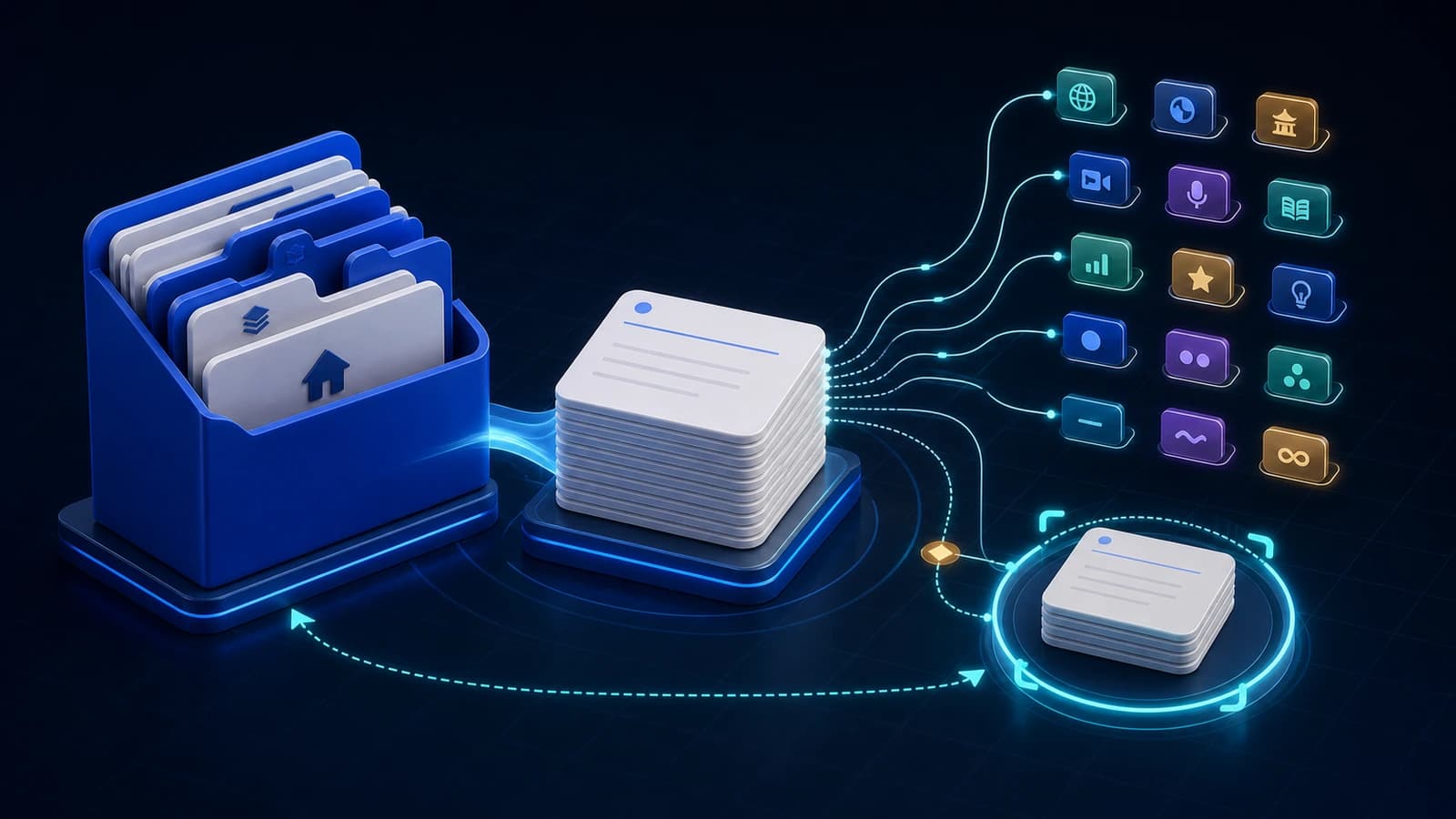
Decks, tags, or filtered decks?
The practical difference is control versus description. A card belongs to one home deck. Its note can carry several tags, and every sibling card generated from that note shares those tags. The official Anki organization guide therefore recommends decks for broad categories studied separately and tags or fields for flexible classification.
| Need | Use | Language-learning example |
|---|---|---|
| Review a broad group separately every day | Deck | Spanish |
| Apply a genuinely different study boundary or preset | Subdeck | Spanish::Listening Intensive |
| Describe one note in several ways | Tags | source::podcast level::b1 grammar::subjunctive |
| Focus on a subset for one session or short project | Filtered deck | Due B1 listening cards from one source |
| Preserve exact provenance | Field, not a tag | Series title — Episode 4 — 12:36 |
A useful test is: Will I intentionally study or configure this group separately most weeks? If yes, consider a deck. If no, make it a tag, field, or saved search.
Do not use the deck tree to describe every property. “Spanish::B1::Grammar::Subjunctive::Show A” forces one card into a single path even though it can also be listening practice, informal speech, and a sentence-mining example.
Start with one main language deck
For one active language, begin with a deck named simply Spanish, Japanese, or another durable label. This gives reading, listening, vocabulary, and grammar cards a shared review queue. Anki’s manual defines a deck as a group of cards with its own study selection and settings; parent decks can include subdecks using :: in their names. See the official deck overview.
When a subdeck earns its place
Use a subdeck when the boundary changes how you repeatedly study, not merely how you browse. Reasonable cases include:
- a second language that needs its own daily new-card limit;
- an intensive listening set you always open separately;
- a course deck that must remain operationally separate for a fixed period; or
- material using a deliberately different options preset.
Subdecks can have different presets, and a card uses the settings of the subdeck it is in, with documented exceptions for parent limits and display order. Review those details in the official deck-options guide before building a deep tree.
If the only difference is “this came from episode 7” or “this demonstrates the past tense,” keep it in the main deck. Those are descriptions, not permanent scheduling boundaries.
Build a tag system that scales
Tags work best as a few predictable namespaces. Anki uses :: for tag trees, and a search such as tag:grammar also finds its subtags. The official search reference documents tag and deck queries.
Here is a compact starting system:
| Dimension | Examples | Rule |
|---|---|---|
| Language | language::spanish | Useful in a shared deck; optional in a one-language deck |
| Source type or series | source::podcast, source::series-a | Keep exact episode and timestamp in Source |
| Working level | level::a2, level::b1 | Treat level as a useful estimate, not a permanent truth |
| Grammar | grammar::past::preterite | Tag only the feature the note actually illustrates |
| Skill | skill::listening, skill::reading | Describe the learning use, not every possible use |
| Workflow state | status::needs-audio | Remove the tag when the work is complete |
Naming rules worth keeping
Choose lowercase names, use hyphens inside multiword labels, and reserve :: for hierarchy. Pick singular or plural once. Avoid near-duplicates such as tv, shows, and series unless they mean different things. A tag should answer a future query you can imagine running.
Keep content in semantic fields rather than squeezing it into the taxonomy. The Anki card-fields guide separates Sentence, Meaning, Audio, Image, Source, and Notes so tags do not become a substitute database. For video cards, the source timestamp guide shows why an exact title and time belong in a Source field rather than a long chain of tags.
Use filtered decks for temporary focus
A filtered deck is a temporary study view built from a search. It can gather cards by tag, deck, due state, lapse count, or other criteria, then return cards to their home decks. This makes it the right tool for “study due B1 listening cards from this course today” without turning B1, listening, and the course name into nested permanent decks.
For example, a focused search could combine:
deck:Spanish tag:skill::listening tag:source::series-a is:due
Check the result in Browse before building the session. Suspended, buried, or already-filtered cards cannot be pulled into another filtered deck. Also check scheduling: according to the official filtered-deck guide, answers affect scheduling by default; disabling rescheduling creates a preview-style session instead.
Filtered decks are not a reason to cram every grammar family in isolation. Mixed retrieval is often the point of the main deck. Use temporary focus to diagnose, prepare, or catch up, then return to ordinary scheduled reviews.
Migrate a messy collection safely
Restructure in small, countable batches instead of rebuilding from exported cards.
- Back up and sync. Confirm the collection is current before bulk changes.
- List existing decks. Mark which ones represent real recurring study boundaries and which merely describe a source, lesson, or grammar point.
- Design the destination. Usually this is one main language deck plus at most a few justified subdecks.
- Preserve meaning with tags. Before collapsing
Spanish::Shows::Series A, bulk-addsource::series-ato its notes. Tags apply at note level, so sibling cards receive the same classification. - Move one batch. In Browse, select the relevant cards and use Change Deck to place them in the new home deck.
- Verify with searches. Compare counts, inspect
tag:none, and spot-check sibling cards, media, and due states. - Test a normal review and one filtered search. Confirm the simple structure still supports both everyday study and occasional focus.
- Delete empty decks only after verification. Keep the migration reversible until the new system survives real use.
Do not redesign fields, note types, templates, tags, and decks in one untraceable operation. If card content also needs cleanup, use the safe field-migration sequence in the card-fields guide and the retrieval checks in Anki card-design best practices.
Avoid common organization traps
A deck per show or podcast
The source does not usually change how the card should be scheduled. Keep one deck, a short source tag, and the exact episode or timestamp in its field. This also keeps cards from the same episode from arriving as an easy, recognizable block.
A deck per grammar point or level
One sentence can illustrate tense, register, collocation, and listening. Tags can express that overlap; a deck path cannot. Levels also change as your ability and judgment improve.
A deck per capture session
Do not let the folder created during import become permanent architecture. After quality control, move useful cards into the durable study deck and preserve provenance separately. The sentence-mining workflow explains how to keep one target and a recoverable source on each note.
Tagging everything that might be true
More tags do not automatically create more control. If you never search for interesting, useful, or misc, those labels are maintenance debt. Start with two or three dimensions and add a namespace only when a real browsing or filtered-study need appears.
If you are creating a cleaner structure from scratch, the free language-learning Anki template provides editable fields and templates without prescribing a maze of content decks.
Anki tags vs decks FAQ
Should I use one Anki deck for language learning?
Usually, use one main deck per language and describe topics, sources, levels, and grammar with tags. Add a subdeck only when you consistently need a separate study boundary or different deck settings.
Are Anki tags better than decks?
Tags are better for flexible description because one note can have several tags, while a card has one home deck. Decks remain useful for broad groups you deliberately study or configure separately.
Should each show or course have its own Anki deck?
Usually no. Keep the cards in the main language deck, record the exact title and timestamp in a Source field, and use a source tag when you want to find that group again.
Do filtered decks change Anki scheduling?
By default, answers in a filtered deck affect scheduling before cards return to their home decks. Turn off rescheduling only when you intentionally want preview mode, and check the filtered-deck settings before studying.
Related guides
Anki Card Fields for Language Learning: A Clean Setup
Build reusable Anki note fields for sentence, focus, meaning, translation, audio, image, source, and notes without locking content into one layout.
Read article →Sentence Mining With Anki: Examples, Template, and Checklist
Learn how to sentence mine with Anki: choose one-target sentences, see a complete card example, use a practical template, and control review load.
Read article →Add Source Timestamps to YouTube Anki Cards
Store useful source timestamps on video-derived Anki cards so you can reopen the exact scene, verify context, repair errors, and avoid cluttered prompts.
Read article →Anki Card Design: 12 Best Practices for Language Learning
Design clearer language-learning Anki cards with one retrieval target, honest prompts, readable layouts, useful media, and sustainable card counts.
Read article →